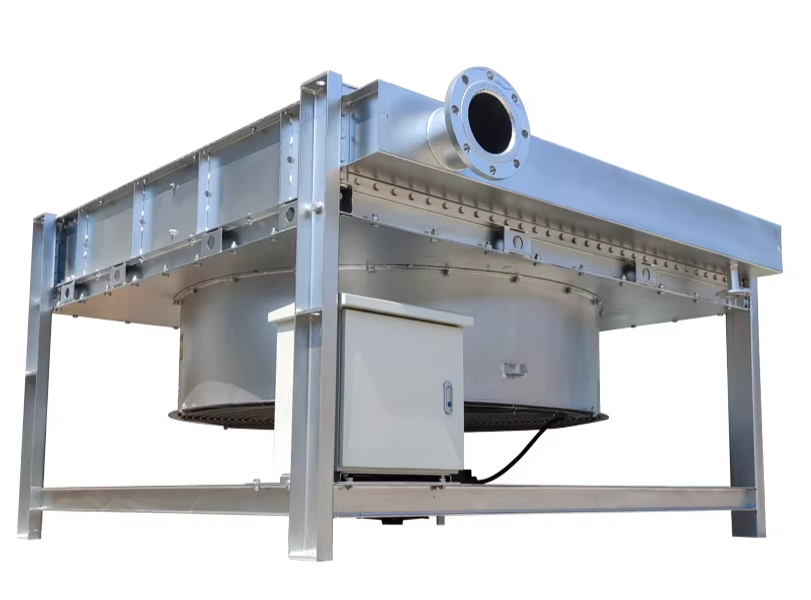
Air cooler
An air cooler, also known simply as an air condenser, uses air as a coolant and can be used as both a cooler and a condenser. It mainly consists of a tube bundle, support frame, and fan. In an air cooler, the hot fluid flows inside the tubes, while air blows over the outside of the tube bundle. Because the required airflow for heat exchange is large, while the air pressure is relatively low, axial flow fans are often used (see Fluid Transport Machinery). The type and material of the tube bundle greatly affect the performance of the air cooler. Since the heat transfer coefficient on the air side is very small, fins are often added to the outside of the tubes to increase the heat transfer area and fluid turbulence, thereby reducing thermal resistance.
Because most cooling water contains calcium and magnesium ions and acidic carbonates, carbonates are formed when the cooling water flows over metal surfaces. In addition, oxygen dissolved in the cooling water can cause metal corrosion, forming rust. Due to the formation of rust, the heat exchange performance of the air condenser decreases. In severe cases, only spraying cooling water on the outside of the shell is possible; severe scaling can clog the tubes, rendering heat exchange ineffective. Research data shows that scale deposits significantly impact heat transfer loss, leading to increased energy costs as deposits accumulate. Even a thin layer of scale can increase operating costs for scaled areas of equipment by over 40%. Keeping cooling channels free of mineral deposits saves energy, extends equipment lifespan, and reduces production time and costs.
Traditional methods include scraping and brushing. Brush away the areas needing cleaning; for stubborn dirt, use a scraper. Another method is high-pressure water or chemical cleaning (primarily acid washing). Simply apply high-pressure water or chemical solutions to the affected areas to allow the dirt to react and loosen.
However, these traditional methods are generally not very thorough, and chemical cleaning can corrode and damage the equipment. The waste liquid left after chemical cleaning requires significant investment in treatment. Therefore, using cleaning agents is more environmentally friendly, safer, and provides a more thorough cleaning. It generally does not cause oxidation and is beneficial to the lifespan of the air cooler.